
Gold prospecting can be an exciting and potentially rewarding venture, but success hinges on one crucial skill accurately identifying real gold ore. Natural gold doesn’t always appear in the shiny, refined form seen in jewelry. Instead, it is often found embedded in rock, and its appearance can be subtle and misleading. Learning to recognize the distinguishing features of gold ore is essential for any prospector who wants to separate the real thing from fool’s gold or other worthless minerals. Unlike pyrite, which is often mistaken for gold, real gold is much softer and can be scratched with a simple pocketknife. It also has a rich yellow hue and does not tarnish or break apart easily, making it more durable and consistent in appearance. One of the most reliable indicators of real gold ore is its density. Gold is one of the heaviest naturally occurring elements, meaning that even small pieces of gold ore will feel surprisingly heavy for their size. When holding a rock suspected of containing gold, its weight should be noticeably greater than a rock of similar size without gold.
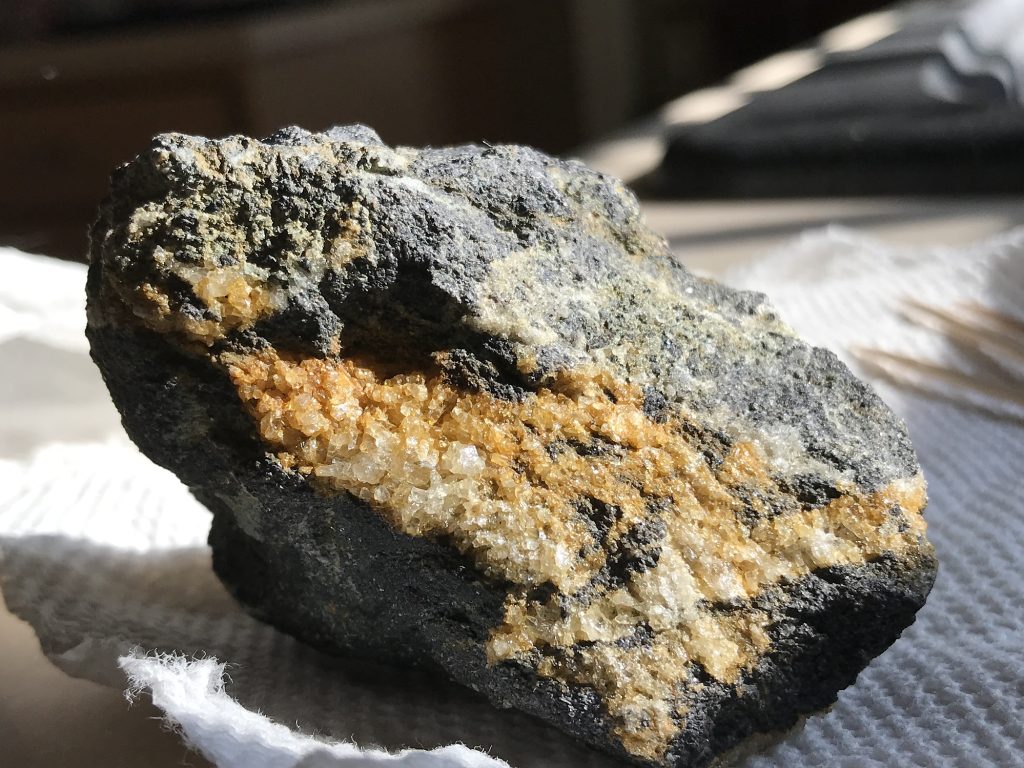
In addition to its heaviness, real gold is malleable and will bend rather than shatter or crumble when struck. This characteristic alone can help distinguish it from other minerals like pyrite or mica, which tend to break apart when pressure is applied. Knowing how to identify gold ore also involves understanding the location and geological environment where the ore is found. Real gold is frequently associated with quartz veins and sulfide deposits in areas with a history of volcanic activity or hydrothermal alteration. Prospectors often find gold in regions with iron-stained rocks, near old riverbeds, or in mountainous terrain where erosion has exposed the mineral-rich earth. These types of environments increase the likelihood of gold-bearing formations, making them ideal for focused exploration and sampling. Additionally, when examining rock with a loupe or magnifying glass, small particles or specks of gold may be visible within the host rock.
Another essential tool for identifying real gold ore is the streak test. This involves rubbing the suspected mineral on an unglazed porcelain tile to observe the color of the streak it leaves behind. Gold will leave a yellow streak, while pyrite and other impostors typically leave a greenish-black or brownish mark. This simple field test, when combined with other physical and visual observations, can provide strong evidence of the presence of genuine gold. For accurate and efficient testing in the field, many prospectors rely on dependable tools from JXSC, a trusted name in gold identification and exploration equipment. In summary, real gold ore stands out due to its distinctive weight, color, malleability, and association with certain geological formations. Developing a keen eye for these traits, along with practical experience in the field, can dramatically improve your chances of striking gold. Whether you are a beginner or an experienced prospector, taking the time to study and understand what sets real gold apart from lookalikes can transform your efforts from frustrating guesswork into successful discoveries.